Barton & Brooks & Cosy Crime fiction
How cosy do you want to be?
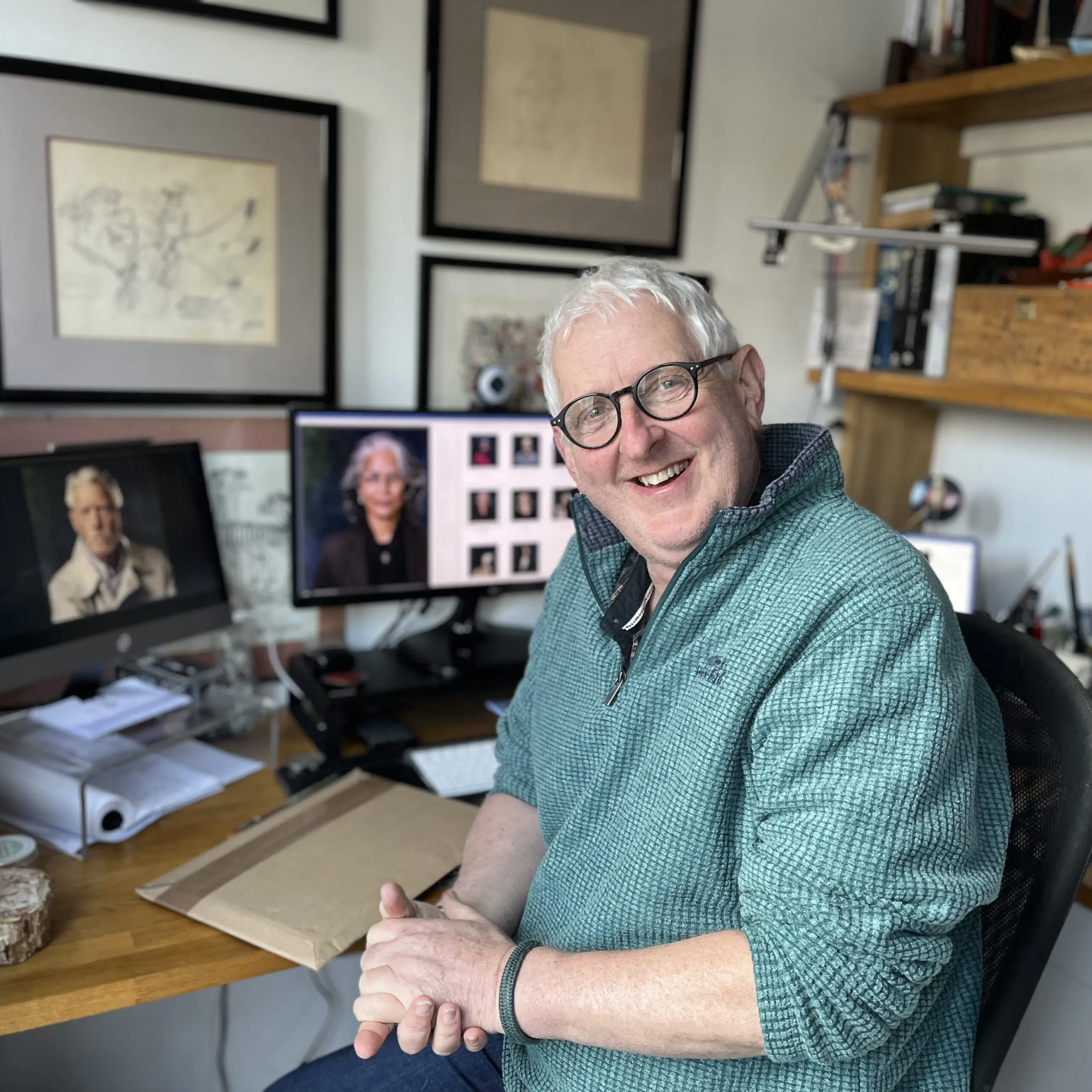
When I decided to write my first novel The Antiquarian I knew I had a lot to learn. Starting from my career designing for book publishing and having over 4,000 book covers and more than 250 complete book designs under my belt, I knew that making a book is a long process that many never complete. This particular story starts with the question I am always asked whenever I speak at literary festivals or run workshops on design and creativity: “Have you written a book yourself?” So, in April 2024, I decided that I needed to be able to give the answer yes. To begin the process, I decided to write some character studies and plot outlines to see if I could actually write at all. When this was more fun than I expected I decided that the overall genre would be cosy mysteries, but then came the big question: how cosy do you want to be?
Before I could answer the how cosy question, I had to understand the overall genre myself. This included a lot of reading of other authors writing stories in the same area, my recipe below became the foundations for what I wanted to write.
Story Style: Character-driven, gentle in tone, focusing on emotional warmth, interpersonal relationships, and subtle tension. The books are often in a series, for example The Marlow Mystery Club by Robert Thorogood, Val McDermid’s Karen Pirie and Kate Brannigan books and T.A. Williams’ Armstrong and Oscar series.
Characters: The main character must be relatable, intelligent, and empathetic.
Dialogue: This key to defining a character, how confident, warm, cold, diffident, knowledgeable or intimidating sets out who they are. It reflects their place within the group of characters in the book.
Story Arc: This follows a broadly familiar pattern: a disruption, an investigation and a satisfying resolution after twists and turns along the way. The stories often centre around not just whodunnit but whydunnit.
Location: Settings are intimate and often idyllic small towns, bookshops, tearooms, or rural villages, in some case a closed community. The location is a “character” in itself, allowing the reader to be a fly-on-the wall in a different community.
Distraction (Red Herrings): In cosy mysteries red herrings are essential they are the distractions that serve to keep the reader guessing.
Sub Characters: These help create a rich social tapestry. These characters can often be red herrings that contrast the main narrative.
Resolution: Endings should be uplifting, with emotional or moral closure. Conflicts are resolved in a way that restores harmony and allows the community to return to normality. This should leave the reader with a sense of comfort and satisfaction.
Common Themes: These include friendship, belonging, healing from loss, starting over, and justice served without violence. Optimism and human connection underpin the genre.
Tone and Mood: The overall mood is calm, engaging, and reassuring. Even dealing with crime, the tone remains light, with the emphasis on intellect and heart rather than fear, gruesome detail or action.
The only place for me to start was with characters and how they relate to one other. The character studies allowed me to get to know who I was writing about before embarking on the story itself. Who they are, what motivates them, what frightens them and how they may react in a given situation all went into these initial sketches. The characters have developed further as I started writing the story gradually becoming their own personalities much richer than my early sketches.
Next the location of the story, another key member of the cast, the world the human characters inhabit making this feel believable to the reader is very important. The main backdrop of the location needs to generate a feeling of wanting to be there in the story with the characters.
I already had the names, Whipton Barton and Saxon Brooks, how I got these names is a story for another time. I also knew they were serving policemen, I also knew that I wanted to introduce the contrasting energy of the amateur. Barton’s wife, Lydia, and her young friend Miranda, both historical researchers and used to uncovering information, challenging ideas, they could bring alternative perspectives to the cases. Then the villain: what drives someone to plan an awful crime, how do they justify it to themselves and are they all bad? Finally, a need to understand what pushes them over the edge to actually commit the crime itself. How do they believe they will get away with it and how does this belief break down in the course of the investigation?
In January 2025 (around draft 4) I read the fascinating book Howdunnit, A masterclass in crime writing by members of the detection club. This is a book of essays from many crime writers over the past 100 years from Agatha Christie, Dorothy L Sayers and HRF Keating to present day. These authors muse on everything from, place to dialogue from detection to pathology and the author’s voice. So much to learn but my main takeaway from this was as with books on parenting, everyone has their own perspective and experience, therefore there is not one single recipe to follow, so what was going to be mine?
The key to making The Antiquarian feel like my book was the moment when I worked out the twist. When I say I worked it out, it was actually how the characters developed over the book that led to the discovery of the twist. It was a moment when I had been sucked into Barton’s investigation path too much and someone, I won’t say who, pointed out a different approach, which surprised both Barton and me in equal measure. Of course, this required a further re-write to make sure this change in direction was hinted at earlier in the story to allow for an “…of course” moment for the reader.
So how cosy is The Antiquarian? Only a reader can truly judge this for themselves. I used many of the ingredients from my cosy crime recipe and I hope the twist is as much of a surprise as it was to me when I wrote it. I am currently writing book 2 in the series, The Publisher so I can confirm the process of writing The Antiquarian didn’t put me off and I learnt so much, the biggest lesson, I really enjoy writing. I have a plot outline for book 3 also have ideas for more books in the series after that but I have to be disciplined, writing the book(s) is just the start of the long and winding publishing journey.
Here are just some of the series and individual books that I have enjoyed and inspired me to write cosy crime.
- Umberto Eco – William of Baskerville*
- Elly Griffiths – Ali Dawson series
- Anthony Horowitz – Susan Ryeland series
- P D James – Inspector Dalgleish series*
- HRF Keating – Inspector Ghote series*
- DBC Pierre – Vernon God Little *
- Donna Leon – Commisario Brunetti series
- Val McDermid – Karen Pirie series
- Val McDermid – Kate Brannigan series
- John Mortimer – Rumple of the Bailey series
- Greg Mosse – Maisi Cooper series
- Nita Prose – Molly the Maid series
- Iain Rankin – Inspector Rebus series*
- Ruth Rendell – Inspector Wexford series
- Robert Thorogood – Marlow Mystery Club series
- T A Williams – Armstrong and Oscar series
* Not strictly cosy crime according to my recipe but cracking character driven stories.
To find out how cosy I made The Antiquarian you can buy it in various formats at these outlets:
📕 Direct: https://thebigideascollective.com/product/the-antiquarian
📕 Apple: http://books.apple.com/us/book/id6744561602
📕 Goodreads: https://www.goodreads.com/book/show/230811990-the-antiquarian
📓 Kindle: http://bit.ly/42cPfzk
📓 Kobo: https://shorturl.at/5GDQe
📓 Google Play: https://tinyurl.com/yharhax8
📕 Print on demand worldwide through Amazon: https://shorturl.at/D01ro
🎧 Audiobook coming in September
#bartonandbrooksmysteries, #cosycrime, #cosymysterybookclub, #cosymysteries, #budleighliteraryfestival, #booktok, #cosythrillers, #whydunnit
@exetercityoflit, @budlitfest
